
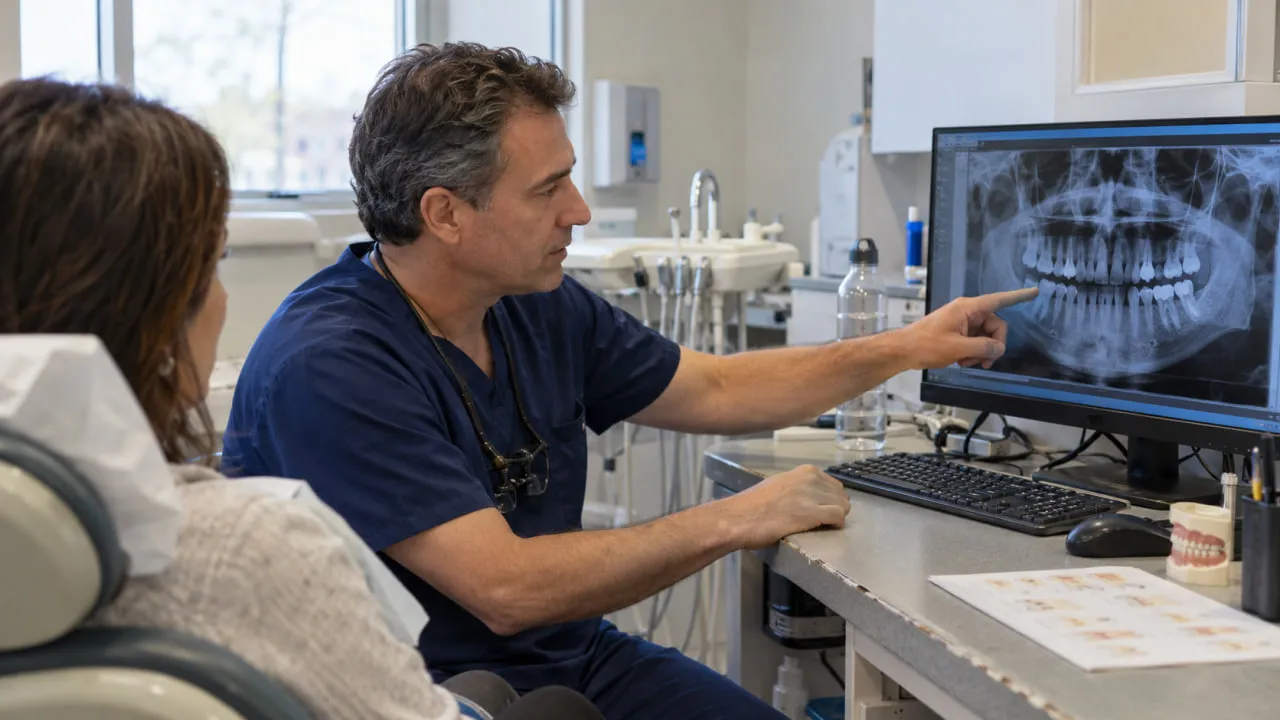
Explore root canal costs in Ontario, including seven pricing factors, crown fees, insurance coverage, CDCP benefits, and how to get an accurate estimate.
Root canal cost in Ontario is not one fixed number because the price of root canal treatment changes with the tooth, canal anatomy, provider, and restoration needed afterward. A typical front tooth may have one relatively accessible canal, while a molar commonly has several canals with more complex anatomy. Specialist fees can differ from general-dentist fees, and a crown, when recommended, is usually priced separately. Publicly posted Ontario figures place the procedure itself from the high hundreds to more than $1,500 in some cases. A useful figure for your tooth comes after an examination, appropriate X-rays, and a written estimate.
How Much Does a Root Canal Cost in Ontario?
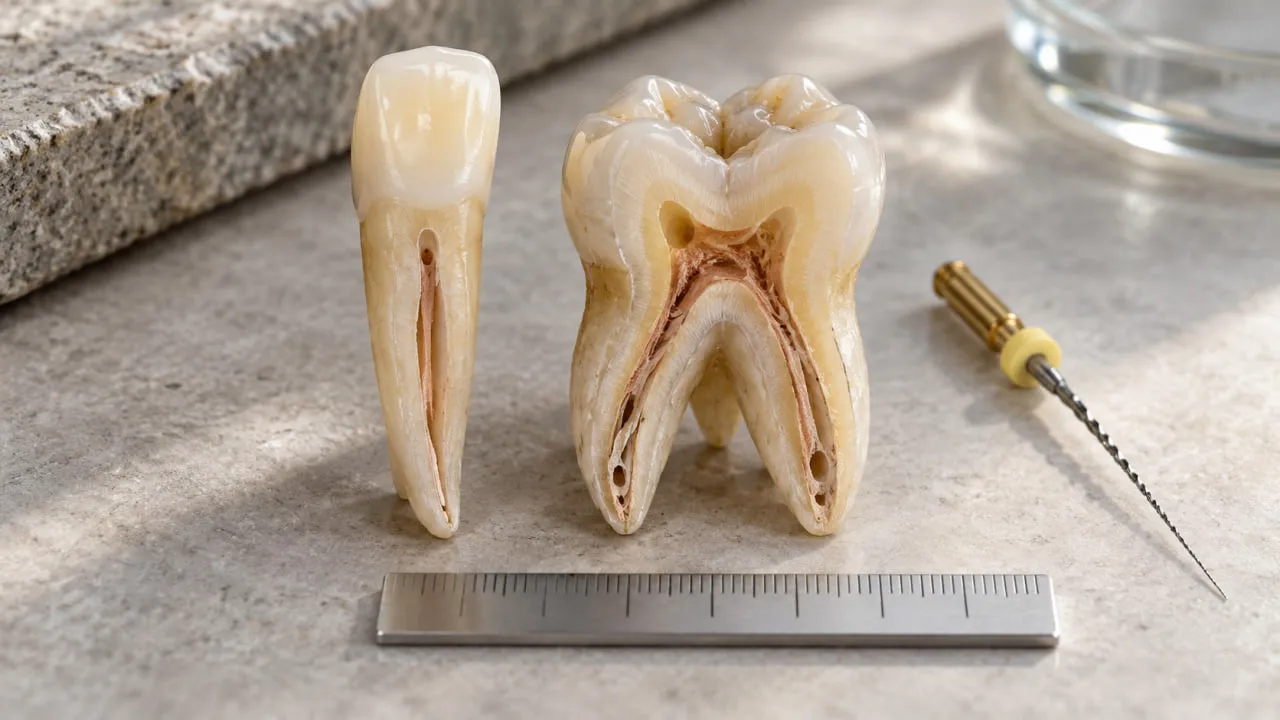
Publicly posted 2026 references for Ontario general dentists place the root canal procedure itself at approximately CAD $760 to $1,630 per tooth. Treat that root canal cost range as a broad Ontario reference, not a quote. It covers the canal work only, it is not a specialist fee, and it is not a fee from Family Dental Care Cayuga.
Where a tooth lands in that range depends largely on anatomy. A front tooth often sits toward the lower end and a premolar tends to fall in the middle. A molar usually sits higher because it commonly has more canals and takes longer to treat.
Tooth type alone does not set the fee, though. Specialist care, retreatment, unusual anatomy, extra imaging, sedation, and the final restoration can each add to the total.
The Ontario Dental Association (ODA) publishes an annual Suggested Fee Guide that dentists and insurers may use as a reference. It is not mandatory. Dentists set their own fees above or below it, and Ontario dentists must disclose when they intend to charge more than the guide amount.
A tooth-specific number needs an examination and appropriate X-rays. The main parts of an estimate usually break down like this:
These are planning references. Keep the public range separate from the dentist's written estimate and the amount left after any eligible insurance or Canadian Dental Care Plan (CDCP) payment.
A phone range can help with early planning, but it cannot account for details that appear on an X-ray or during an examination. When comparing offices, confirm that each figure refers to the same tooth, the same type of treatment, and the same restoration. Otherwise, a lower number may simply leave out services that appear later on a separate estimate.
What Is a Root Canal?
A root canal treats the pulp, the soft tissue of nerves and blood vessels inside a tooth, once it has become inflamed or infected. The fee pays for a sequence of clinical work rather than one quick step:
- Removing the inflamed or infected pulp
- Cleaning and shaping the canal system inside the roots
- Filling and sealing the canals
- Closing the access opening with a temporary or permanent restoration
- Planning the final restoration that will protect the tooth
The goal is to keep a natural tooth that can reasonably be restored. That is not a promise every tooth can be saved, and the dentist first has to confirm the tooth is a sensible candidate.
Dr. Benjamin Chiu performs root canal treatments at Family Dental Care Cayuga, and the examination and X-rays behind root canal treatment in Cayuga are also what shape the estimate. Treatment is available through that office, although a case with complex anatomy or other unusual findings is sometimes referred to a specialist.
Factors That Affect Root Canal Cost
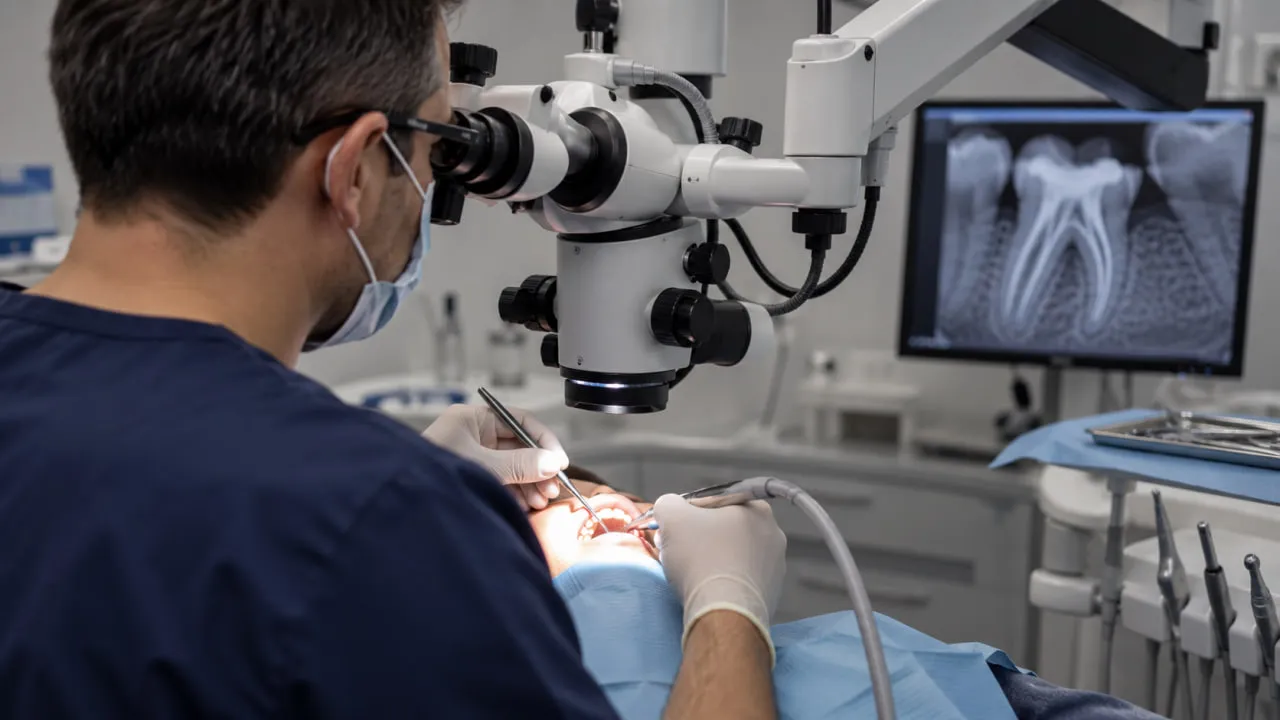
Estimates for the same procedure can differ because the dentist must account for the tooth, its anatomy, and the work required afterward. These seven factors explain what changes the estimate.
1. Tooth Location and Canal Anatomy Affect the Fee
Canal count drives much of the work. Front teeth commonly have fewer canals and easier access. Premolars vary, while molars often have several canals and take longer to reach, clean, and seal.
That is why a molar root canal cost estimate often lands higher than one for an incisor. Anatomy still varies. Curved, narrow, calcified, or difficult-to-locate canals can add time to any tooth.
2. The Tooth's Condition Can Change the Treatment Plan
Two teeth of the same type can need different plans. Deep decay, a crack, a large filling, or an existing crown can affect access and the restoration needed afterward. Some cases also require more than one visit.
Damage is only one input into the fee. Sometimes the examination shows that too little sound structure remains to restore the tooth, which shifts the conversation from price to which options make sense at all.
3. A General Dentist and an Endodontist May Set Different Fees
An endodontist is a dentist who has completed an additional university specialty program in treating the pulp and root canal system. Specialist fees are often higher, reflecting that training, specialized equipment, and the more complex cases specialists tend to see. No fixed markup applies everywhere, so a percentage quoted online is a loose guess, not a rule.
Many root canals are completed by general dentists. Referral becomes more likely with complex anatomy, retreatment, previous complications, or findings that call for a specialist, and a referral does not mean the tooth is untreatable.
If a referral is suggested, ask for the endodontist cost in writing and confirm which parts of care remain with your regular dentist. Dr. Benjamin Chiu performs root canal treatment at the practice; the assessment determines whether outside care is appropriate.
4. Retreatment Is Different From First-Time Treatment
Retreatment applies to a tooth that already had a root canal but has not healed as expected. The dentist reopens the tooth, removes the previous filling material, reassesses the canal system, and addresses whatever prevented healing, such as a canal that was missed or a leaking restoration above it.
That work is why root canal retreatment cost is estimated separately and may require more time or specialist care. The outcome cannot be guaranteed. An existing crown or post may also affect the plan and related restoration fees.
5. The Final Filling or Crown May Be a Separate Cost
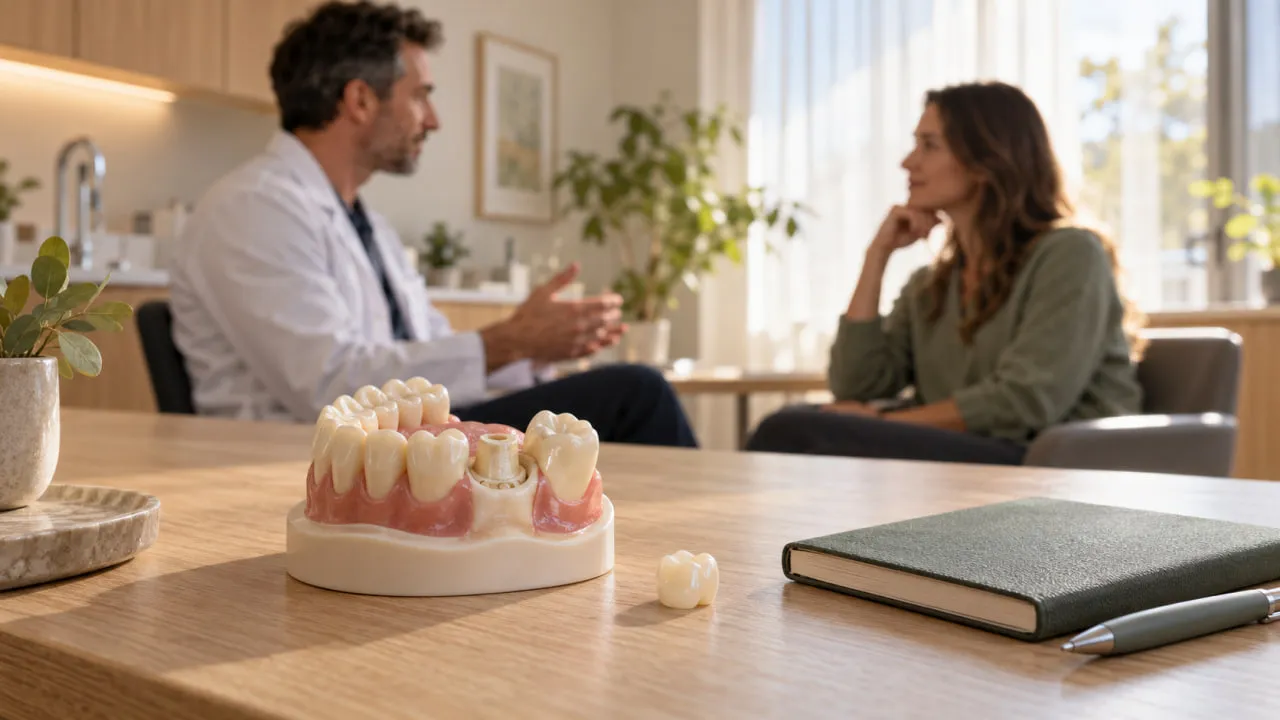
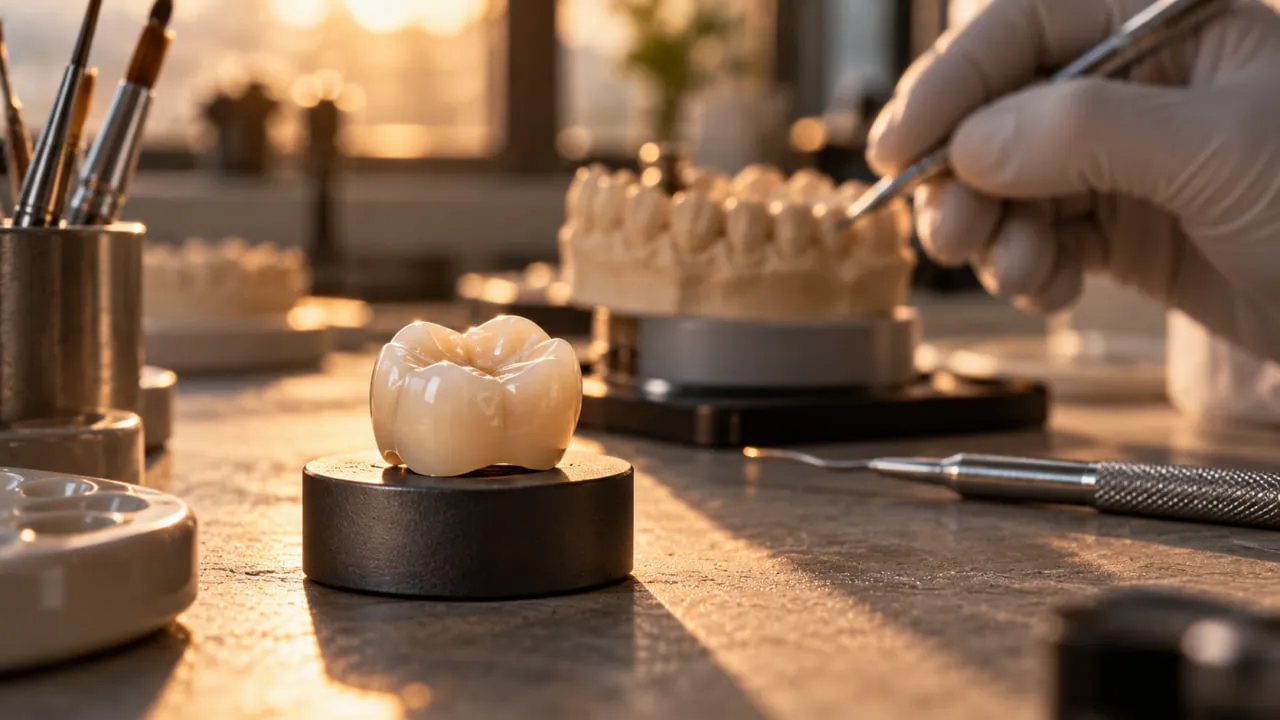
Root canal treatment deals with the inside of the tooth. The final restoration rebuilds and protects the remaining structure, and it is frequently quoted as its own line. When a crown is recommended, the cost of root canal and crown together adds substantially to the canal fee, so review each line on its own.
A crown is not automatic. The choice depends on tooth location, remaining structure, existing restorations, cracks, and bite forces. Back teeth carry heavier chewing loads and are more likely to need broader coverage. In selected cases, a front tooth with enough sound structure may be restored with a filling instead.
A dental crown has its own treatment and fabrication fee, so it is usually estimated separately from the canal. Ask whether a core, post, or commercial laboratory fee is expected as well, since each can appear as its own item.
6. Examination, Imaging, Emergency Care, and Sedation May Be Separate
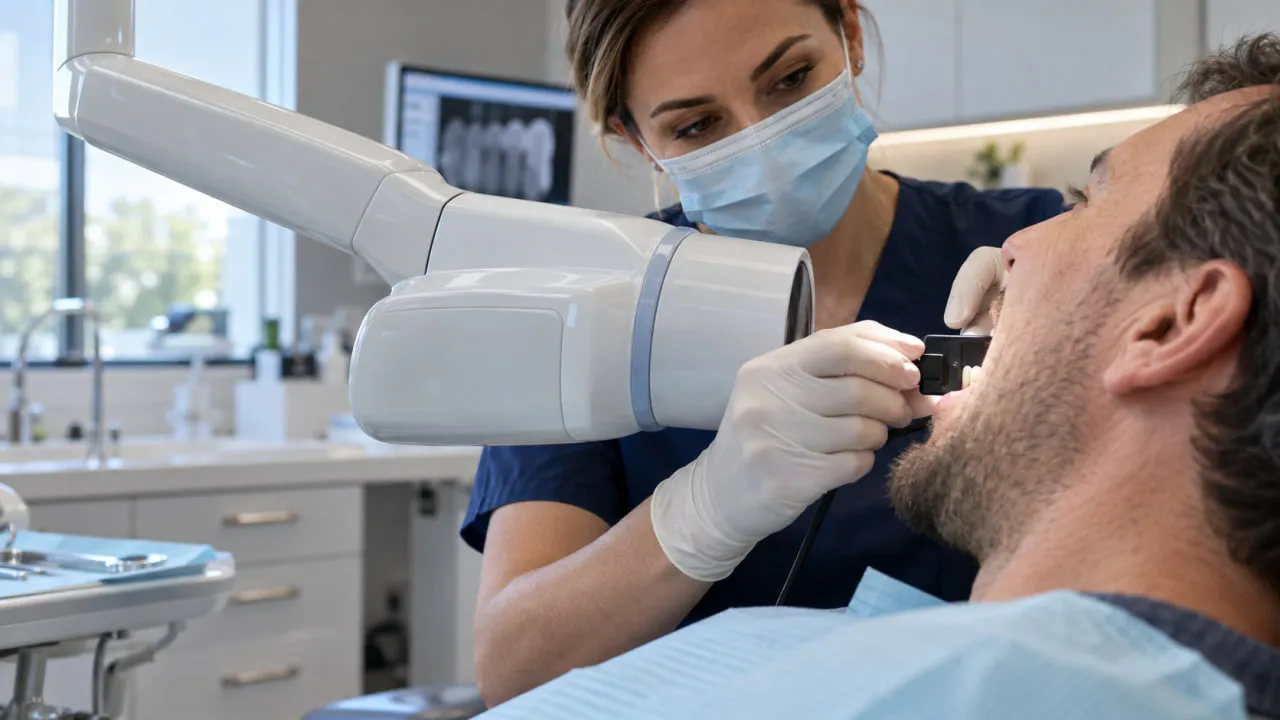
The procedure fee may not be the only line on an estimate. Depending on the office and the case, these services may appear separately:
- An examination or emergency assessment
- Periapical X-rays, which show the full length of the root
- Other imaging, such as a 3D scan, when clinically indicated
- Local anesthesia, if it is not bundled into the procedure
- A temporary restoration between visits
- Sedation for selected cases
- Follow-up visits
Care for a painful tooth often begins with an urgent visit rather than a planned one. The practice offers same-day emergency appointments during office hours and a next-day emergency appointment when an urgent concern begins after hours. That first emergency dental care visit is an assessment of the likely cause, and it does not always lead to a root canal. Local anesthesia is the standard for treatment; sedation is offered only for selected procedures and only when it is clinically appropriate.
An urgent visit may sometimes include an initial treatment step, with the remaining work completed later. Ask how any same-day procedure is billed and whether that amount is included in the later treatment estimate.
7. Practice Location and Fee Setting Affect the Estimate
Ontario has no single mandatory dental price. Each practice sets its own fees after weighing treatment complexity, chair time, materials and equipment, staffing, and overhead, frequently with the ODA guide as a reference point. Office location plays a part because rent, wages, and other overhead differ from one community to the next. Provider type matters too, because specialists set fees on a different basis.
Insurance adds another layer. Many plans reimburse according to a fee level they recognize, which may not match the office fee. When the office fee is higher, some or all of the difference may become part of your share of the root canal treatment cost, subject to the terms of your plan.
That still does not make a smaller-town office cheaper than one in Toronto by default, or the reverse. The reliable comparison is between itemized estimates for the same tooth.
What's Included in the Cost of a Root Canal?
Offices package services differently, so two estimates that look far apart are sometimes just bundled in different ways. One office folds local anesthesia and the temporary filling into the procedure fee; another lists them separately. A quick figure given over the phone usually refers to the canal work alone, and the true root canal cost for your tooth only becomes clear once every line is visible.
An itemized written estimate beats a headline price for practical reasons. It names the tooth and the procedure codes your insurer needs, and it separates what is planned now from what depends on later findings. It also lets you compare offices line by line instead of guessing what a single total contains.
When a commercial laboratory fee applies to a crown, it should be identified separately on the estimate. That distinction helps you see which amount belongs to the dentist's professional service and which belongs to outside fabrication.
Cost is also part of consent. In Ontario, a dentist is expected to discuss fees along with the treatment itself before you agree to proceed, and a complex plan can justify a separate appointment just to go through the numbers. Asking for that time is reasonable, not awkward.
Do I Need a Crown After a Root Canal?
Not always. The right restoration depends on how much of the tooth is left and what it has to withstand:
- Remaining tooth structure once decay and old fillings are removed
- The tooth's position in the mouth
- The size and condition of existing fillings
- Any cracks
- Bite forces, including clenching or grinding
- Whether the tooth is reasonably restorable at all
Back teeth are more likely to need a crown because chewing puts heavy force on them, a point the Canadian Dental Association makes in its guidance on restoring a tooth after root canal treatment. When too little structure remains to hold a crown on its own, a post is sometimes used to help support it.
A temporary restoration is not intended to serve as the final long-term repair. Ask when the permanent restoration should be completed, how to protect the tooth in the meantime, and what symptoms should prompt an earlier call. A dental crown after root canal treatment is a separate decision with its own estimate, and it deserves the same scrutiny as the canal fee.
Does Insurance Cover a Root Canal?

Often, at least in part, but root canal insurance coverage follows different rules in each plan. Private plans and CDCP each work in their own way, and OHIP does not apply in a dental office.
Private and employer dental plans. Plans that include endodontic benefits pay a share of an eligible root canal, but each plan sets its own share and limits. Your portion depends on:
- The deductible you pay before benefits apply
- Co-payment or coinsurance, the percentage you cover
- The annual maximum, and how much of it other treatment has already used
- The plan-recognized fee, which is sometimes lower than the office fee
- Frequency or replacement rules
- Whether the plan classes root canals as basic or major services, since crowns are often classed differently
- Any predetermination requirement
A predetermination means the office sends the planned treatment to your insurer before you start. The reply estimates what the plan expects to pay; it is not a guarantee of payment. Plan terms can change, other claims sometimes use up the maximum first, and the final claim is assessed after treatment. The root canal cost without insurance and the amount you pay after insurance are different numbers, so ask the office to show both.
The timing of claims may also affect your available annual maximum. Ask your insurer how it assigns the root canal and later restoration to a benefit year, without delaying care the dentist considers time-sensitive.
At Family Dental Care Cayuga. The practice accepts private and employer dental plans as well as CDCP. Eligible claims may be submitted electronically where applicable, and direct billing may be available when your plan permits it. Coverage and any remaining patient portion still depend on the plan and the service.
Canadian Dental Care Plan. CDCP root canal coverage applies to eligible members under specific rules:
- Standard root canal treatment on eligible anterior teeth, bicuspids, and first and second molars generally does not require preauthorization.
- Root canal retreatment requires preauthorization and is limited to once per tooth per lifetime. Standard treatment on a third molar also requires preauthorization.
- Crowns and cores have separate requirements and need preauthorization, as do some posts. CDCP considers crowns only for members 18 and older, and a root canal-treated tooth must have healed before a crown is requested.
- CDCP pays its own established fees. A co-payment tied to adjusted family net income applies to some members, and an additional charge is possible when the office fee is higher than the CDCP fee.
- Coverage must be active on the date of service.
- Preauthorization requests are assessed against clinical criteria, and not every request is approved.
OHIP. OHIP does not cover dental services provided in a dentist's office, so a root canal at a dental clinic is not billed to your health card.
If you want a figure for your own tooth rather than a provincial range, call the office at (905) 772-3535 to arrange an assessment. After looking at the tooth and its X-rays, the dentist can discuss the options, expected fees, available coverage information, and potential patient portion.
Is a Root Canal Worth It?
That depends on the tooth and on what you would do if it were removed. Clinically, root canal treatment gives you a chance to keep a natural tooth that can reasonably be restored. Not every tooth qualifies. A deep root fracture, too little remaining structure, or advanced gum disease can make extraction the more sensible plan, and that judgment belongs to the dentist after an examination.
Financially, extraction often has a lower immediate procedure fee, but that comparison only holds for the day of treatment. What happens to the space afterward is a separate decision with its own costs, so compare complete paths:
- Root canal plus permanent restoration: the canal fee, a filling or crown, and possibly a core or post.
- Extraction without replacement: the lowest upfront path, although nearby teeth may drift and the bite may change over time.
- Extraction plus a bridge: the extraction, then preparation of the teeth on either side to support a fixed replacement.
- Extraction plus an implant-supported replacement: the extraction, a surgical implant phase, and a crown, usually spread over several months.
Extraction is not automatically the better or cheaper long-term choice, and neither is keeping the tooth in every case. A fair comparison of root canal cost against the alternatives uses written estimates for the full path you would realistically choose, along with the dentist's view of how restorable the tooth is.
Questions to Ask Before Accepting a Root Canal Estimate
An estimate is easier to trust when you understand every line. Before agreeing to treatment, ask:
- Which tooth is being treated?
- How many canals are expected?
- Is the estimate for first-time treatment or retreatment?
- Who will perform the procedure?
- Are the examination and X-rays separate?
- Is local anesthesia included?
- Is sedation being considered, and why?
- Will the tooth likely need a filling, core, post, or crown afterward?
- Are laboratory charges separate?
- Has a predetermination been submitted?
- What amount may remain after insurance or CDCP?
- Could the plan change after treatment begins?
A low-to-high range is reasonable in complex cases. An extra canal, a calcified canal, or a crack sometimes only becomes clear once the tooth is opened. If the plan has to change during treatment, the dentist should explain the added cost and confirm that you agree before continuing.
Also check how long the estimate remains valid. Dental fees, insurance balances, and program eligibility can change, particularly when treatment is divided across multiple appointments. If the estimate lists a crown for a later date, ask whether that amount is current or will be confirmed again before the restoration begins.
You are also free to get a second opinion before committing. The second dentist will usually need to do their own examination, so expect a fee for that visit, and ask for recent X-rays to be transferred.
Get a Tooth-Specific Root Canal Estimate in Cayuga
A provincial range can help you plan, but it cannot price your tooth. At Family Dental Care Cayuga, the dentist examines the tooth, reviews appropriate X-rays, and explains whether root canal treatment, another option, or monitoring makes sense.
If treatment is recommended, the team can discuss an estimate based on that assessment, so the root canal cost reflects your tooth rather than a provincial range. Bring your private insurance or CDCP details so the team can review available plan information and the potential patient portion. The office at 5 Talbot St W, Unit 1, Cayuga, ON N0A 1E0 sees patients from Cayuga and across Haldimand County.
Call (905) 772-3535 to Arrange a Dental Assessment
Frequently Asked Questions
These answers are general information. Your own estimate and treatment options come from an examination of the tooth.
How Much Does a Root Canal Cost in Ontario?
Public 2026 references for Ontario general dentists put the procedure alone at roughly CAD $760 to $1,630 per tooth, with front teeth usually toward the lower end and molars toward the higher end. That figure is not a quote. It leaves out any crown and usually the examination, X-rays, and sedation, while specialist and retreatment fees are set on their own basis. A written estimate after an examination gives the number for your own tooth.
Is a Molar More Expensive Than a Front Tooth?
Often, yes. Molars commonly have three or four canals, sit farther back, and take longer to treat, while front teeth typically have one canal and easier access. Anatomy varies, though. A front tooth with an extra or calcified canal sometimes takes more work than expected, and the estimate follows the actual tooth rather than its category.
Does OHIP Cover a Root Canal?
No. OHIP does not cover dental services provided in a dentist's office, which is where a routine root canal takes place. Help with the bill usually comes from other sources, such as a private or employer plan or the Canadian Dental Care Plan.
Does the Canadian Dental Care Plan Cover a Root Canal?
CDCP can cover eligible root canal treatment when program criteria are met. Standard treatment on anterior teeth, bicuspids, and first and second molars generally does not need preauthorization, while retreatment and third molar treatment do. A co-payment based on adjusted family net income applies to some members, and an additional charge is possible when the office fee exceeds the CDCP fee. Coverage must be active on the date of service.
What If the First Root Canal Did Not Heal?
Symptoms that persist or return around a previously treated tooth need assessment. Depending on the findings, options include retreatment, endodontic surgery at the root tip, a different restorative approach, or extraction. Each option carries its own estimate, and under CDCP both retreatment and root-tip surgery require preauthorization.
Is It Cheaper to Pull the Tooth?
On the day of treatment, it often is. Over time, it depends on what happens to the space. Leaving the gap adds nothing upfront but may allow nearby teeth to shift, while a bridge or implant-supported replacement adds separate procedures and fees. Compare the full paths in writing, since neither option is always the cheaper one.
How Long Does a Root Canal Take?
Timing varies with the tooth, the number and shape of its canals, infection, whether it is a retreatment, and the provider. Many teeth are treated in one or two appointments, while others need more. The dentist can estimate the number of visits after examining the tooth and reviewing X-rays.
What Happens If I Can't Afford a Root Canal?
Ask for an itemized estimate and a predetermination, or CDCP preauthorization where required, and confirm that your insurance or CDCP coverage is active. Then ask the dentist which part of the plan is urgent, which parts can safely wait, and whether clinically reasonable alternatives exist. Putting off recommended care without that conversation can let the problem become harder to treat.
How Urgent Is a Root Canal?
Urgency depends on symptoms and on what the examination shows. Contact a dentist promptly for persistent pain, swelling, fever, drainage, or symptoms that are getting worse. Seek urgent medical care by calling 911 or going to an emergency department for difficulty breathing or swallowing, spreading swelling, severe illness, or bleeding that will not stop.