
Toothache vs Abscess: How to Tell If a Dental Infection Is Spreading


Toothache vs abscess: compare symptoms, spot signs of a spreading infection, and learn when to call a Cayuga dentist or go to the hospital.
Medically reviewed by Dr. Benjamin Chiu, General Dentist
Sorting out toothache vs abscess often becomes urgent when a mild toothache turns into throbbing tooth pain, keeps you awake or appears with swelling. You may wonder whether the problem is a cavity, a cracked tooth or a dental infection that needs prompt care.
Symptoms provide useful clues, but they cannot confirm the cause. Pain from different dental problems can feel similar, and an abscess does not always cause severe pain. This guide explains what separates a toothache from an abscess, which changes may signal a spreading infection, what you can safely do while waiting and when the hospital is more appropriate than a dental office.
Toothache vs Abscess: What Is the Main Difference?

A toothache is a symptom that can result from decay, a crack, an irritated nerve, a damaged filling or a gum problem. A dental abscess is a pocket of infection around a tooth root or in the nearby gum. Swelling, drainage, fever or feeling unwell raise concern, but a dental examination is needed because symptoms often overlap.
An abscess can also drain through a small opening in the gum. When that happens, pressure and pain may decrease even though the infection remains. If pain is persistent, worsening or accompanied by swelling, Family Dental Care Cayuga offers same-day emergency dental appointments in Cayuga during office hours.
How Tooth Pain Can Progress from Irritation to Infection
When the Pulp Is Irritated but May Still Recover
Enamel, the hard outer layer, contains no nerves. Beneath it, dentin surrounds the pulp, where the nerves and blood supply are located. Decay, exposed dentin, a crack or a damaged restoration can irritate the pulp and cause sensitivity. Brief sensitivity may occur with reversible inflammation, but the pattern alone does not identify the cause.
When Bacteria Reach the Pulp and an Abscess Forms
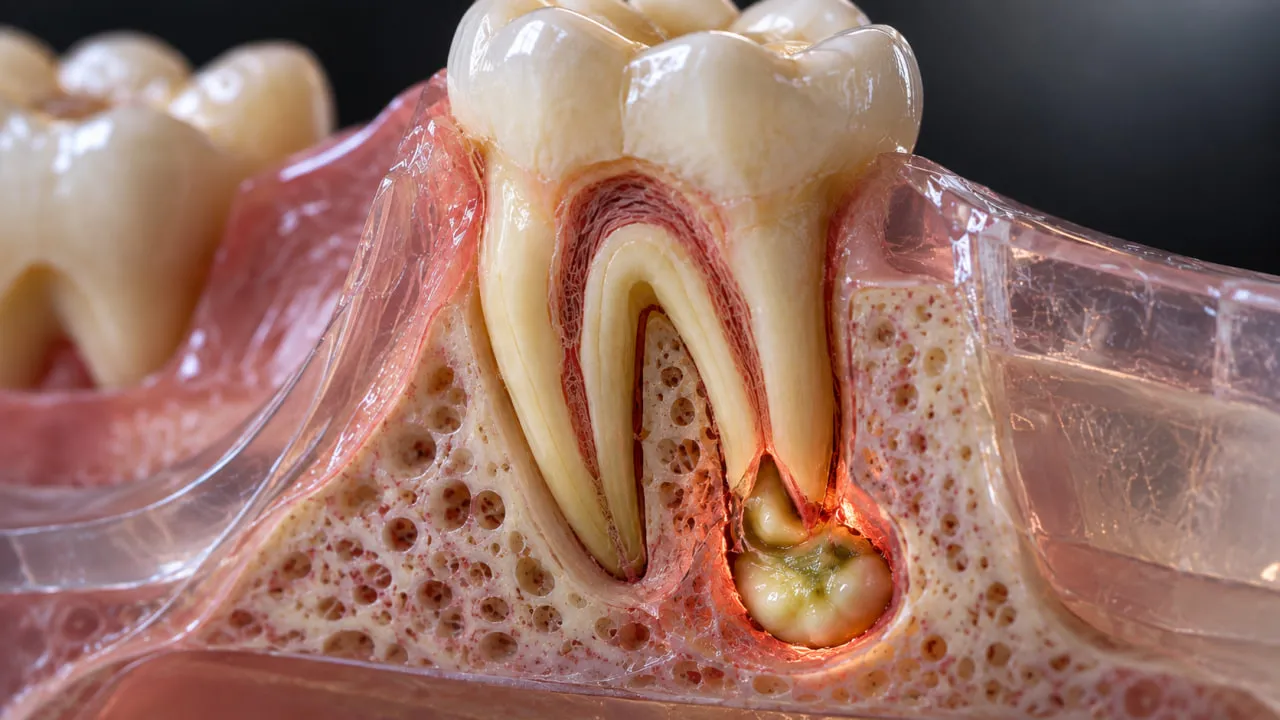
When bacteria reach the pulp, the tissue can lose its blood supply and infection may extend through the root tip, forming a periapical abscess. A periodontal abscess develops in the gum tissues beside a tooth. Both need professional assessment, but their treatment can differ.
Toothache vs Abscess Symptom Comparison
This comparison can help you describe the problem when you call. It is not a home diagnostic test.
5 Signs a Tooth Infection May Be Spreading
Changes beyond the tooth itself matter most when assessing toothache vs abscess symptoms. Contact a dentist promptly if any of the following signs develop.
1. Increasing Swelling in the Gum, Face or Neck
A gum bump may drain an infected tooth. Swelling extending into the cheek, jaw or beneath the chin is more concerning. Rapid swelling or swelling near the eye or neck needs urgent medical assessment.
2. Pain Eases After a Bad or Salty Taste

A foul or salty taste followed by less pain can mean an abscess has drained. The relief is temporary; contact a dentist that day.
3. Lymph Nodes Become Tender
Lymph nodes under the jaw or in the neck may become tender. This does not prove wider spread, but fever, facial swelling or worsening pain increases the urgency.
4. Fever, Chills or Feeling Unwell
Fever, chills or feeling unwell can accompany a dental infection. Call promptly and describe every symptom. Severe illness, confusion or rapidly increasing swelling needs emergency medical care.
5. Difficulty Opening the Mouth, Swallowing or Breathing

Inflammation near the jaw muscles can limit mouth opening. More extensive swelling can interfere with swallowing, speech or breathing.
Call 911 or go to the nearest emergency department if you have difficulty breathing or swallowing, rapidly increasing swelling, swelling near the eye or into the neck, or severe illness. Do not wait for a dental appointment.
What to Do While Waiting for Dental Care
Temporary measures can ease toothache vs abscess symptoms, but they cannot treat decay, damaged pulp or infection.
Safe Temporary Steps
- Rinse gently with warm salt water.
- Place a cold compress against the outside of the cheek for short intervals.
- Choose soft foods and avoid chewing on the painful side.
- If you use non-prescription pain medicine, follow the product label. Ask a pharmacist or healthcare professional if you are unsure whether it is safe for you.
What to Avoid
- Do not place aspirin directly on the tooth or gum because it can damage the tissue.
- Do not pop, squeeze or pierce a gum boil.
- Do not apply heat to facial swelling.
- Do not take leftover antibiotics or medication prescribed for someone else.
- Do not assume that the problem has resolved because the pain has eased.
During routine dental checkups and professional cleanings, the examination can identify cavities, damaged restorations and gum problems that are easy to miss at home.
How a Dentist Assesses and Treats a Dental Infection

To distinguish toothache vs abscess, the dentist reviews your symptoms, examines the tooth and surrounding tissues, and may test its response to pressure or temperature. An X-ray may help locate infection or assess the bone around the root.
Treatment depends on the source and whether the tooth can reasonably be restored. Options may include:
- Draining the abscess
- Root canal treatment to remove infected tissue and retain a treatable tooth
- Extracting a tooth that cannot reasonably be restored
- Prescribing antibiotics when there are clinical signs that they are needed, such as systemic involvement or spreading infection
Antibiotics do not remove infected or dead tissue inside a tooth. The American Dental Association’s guidance on antibiotics for dental pain and swelling prioritizes dental treatment for most localized conditions in otherwise healthy adults.
Emergency Dental Care and Direct Billing in Haldimand County
Family Dental Care Cayuga is located at 5 Talbot St W, Unit 1. The office sees patients from Cayuga and across Haldimand County, including Caledonia, Hagersville, Dunnville and Fisherville.
Same-day emergency appointments are available during office hours. If toothache vs abscess symptoms begin after hours, a next-day emergency appointment is available. Call (905) 772-3535 first so the team can arrange the next step.
The practice accepts private and employer insurance plans and the Canadian Dental Care Plan. Eligible claims may be submitted electronically, and direct billing may be available when the plan permits it. Coverage and any patient portion vary. The insurance and direct billing information for new patients explains what to bring.
What to Do Next
Because the toothache vs abscess distinction cannot be confirmed at home, persistent pain, swelling, drainage, fever or worsening symptoms need a dental assessment. Even if an abscess drains and the pain decreases, the source still requires treatment.
For current tooth pain or swelling, call Family Dental Care Cayuga at (905) 772-3535. Same-day emergency appointments are available during office hours. For a routine examination or checkup, use the clinic’s Max Assist booking option.
Frequently Asked Questions
Can a toothache develop into a dental abscess?
Yes. The toothache vs abscess picture can change if decay or a crack lets bacteria reach the pulp. Early care may reduce that risk.
Can a dental abscess occur without severe pain?
Yes. Pain may decrease if the pulp dies or the abscess drains. A gum bump, bad taste or swelling still needs assessment.
How long can a dental abscess safely go untreated?
There is no reliable safe waiting period. Contact a dentist if you notice swelling, drainage, a gum boil, fever or persistent throbbing pain.
Will antibiotics cure a dental abscess?
Antibiotics alone do not usually remove the source. Drainage, root canal treatment or extraction may still be needed. Never use leftover antibiotics.
What does it mean if an abscess bursts and the pain stops?
Fluid may have drained and lowered the pressure, but the source remains. Do not squeeze the area; contact a dentist.
When should I go to the hospital instead of a dentist?
Call 911 or go to the emergency department for breathing or swallowing difficulty, rapid swelling, eye or neck swelling, confusion or severe illness. Otherwise, call the dentist.
Does Family Dental Care Cayuga accept insurance and CDCP for emergency visits?
Yes. The practice accepts private and employer insurance and the Canadian Dental Care Plan. Direct billing may be available. Coverage and the patient portion depend on the plan and treatment.