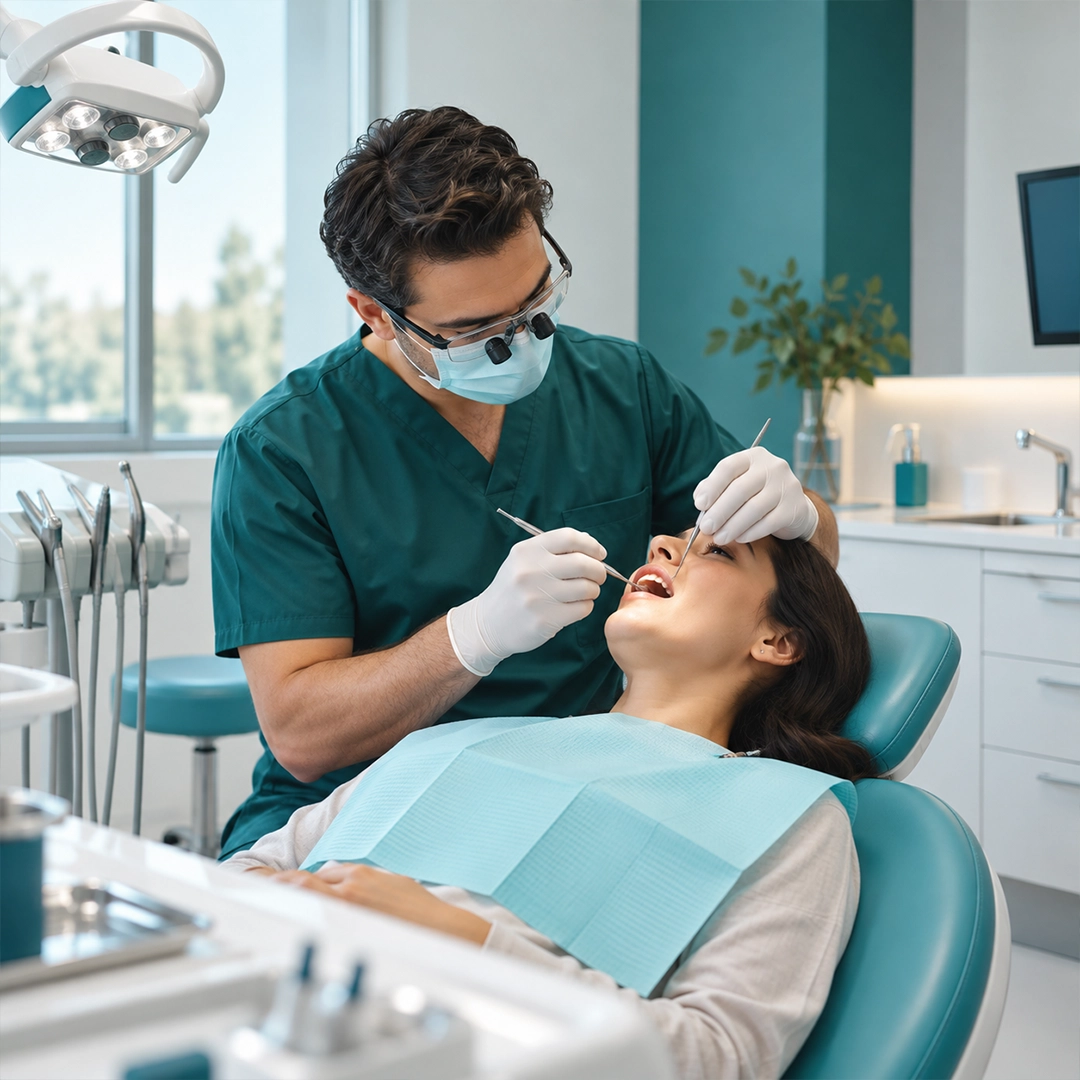
Children’s Dental Care in
The first visit can feel like a lot of new information at once. The chair moves, the light is bright, and there are tools a child has never seen before. Clear explanations make that setting easier to understand without turning the appointment into a big event.
Family Dental Care Cayuga provides children’s dental care in Cayuga and across Haldimand County. Our general dentists see children as part of family dental care, from early visits through the school years and into the teens. The focus is on checking the teeth and gums, answering parent questions, and planning care from what the child actually needs. Routine care can continue as the child’s needs change with age.
For a first visit, the team uses simple, age-appropriate language and gives children time to become familiar with the setting before moving ahead. Parents can ask questions throughout the appointment.
Children’s dental care is provided by general dentists Dr. Benjamin Chiu, Dr. Jennifer Vien, Dr. Victoria Tu, and Dr. Celina Tang. Dr. Chiu earned his DDS with Honours from the University of Toronto.

Dental Care as Baby Teeth Give Way to Adult Teeth
Children’s dental needs change as they grow, so routine visits look different at each stage.
- Early Visits and Baby Teeth The Canadian Dental Association recommends a first dental assessment within six months of the first tooth appearing or by age one. At that stage, the visit is mainly about looking at the teeth and gums, checking how the first teeth are developing, and giving parents a chance to ask practical questions about teething, brushing, feeding habits, and home care.
- The School-Age Years As baby teeth begin to loosen and permanent teeth emerge, a child’s mouth can contain both for several years. Permanent molars also begin appearing during this stage, adding new areas that may need attention during brushing. Routine examinations allow the dentist to follow how the teeth are developing, look for decay or gum changes, and assess areas that are difficult to keep clean. If a tooth is slow to emerge or its position raises a concern, the dentist can decide whether it simply needs monitoring or further assessment.
- Routine Cleanings and Preventive Care Brushing and flossing at home remain important as children grow. Professional cleaning can remove plaque from difficult areas and hardened tartar that requires dental instruments. The hygiene team can also point out places that are being missed and suggest practical changes to home care. Dental X-rays may be recommended when clinically indicated rather than automatically at every visit. The need for imaging depends on the child’s dental history, symptoms, previous images, and examination findings. Families from Hagersville and elsewhere in Haldimand County can book routine children’s dental visits at the Cayuga office. As permanent teeth emerge, home-care advice can also change with new brushing and flossing needs.
Helping Children Feel More Familiar With Dental Visits
A child usually needs to know what is happening next and what a tool is for, not a long explanation of dentistry. Keeping the language simple can make each step easier to follow and gives the visit a clearer rhythm. The dentist or hygienist can use plain, age-appropriate language, give the child a moment to look around, and answer questions as they come up.
A first visit does not need to follow the same sequence for every child. What can be completed that day depends on the reason for the visit, the clinical findings, and how the child is managing the appointment.
A toddler with a few new teeth needs a different kind of visit from a school-age child losing baby teeth and getting permanent molars. The team can adjust the pace and explanation while still keeping the clinical purpose of the appointment clear.
Parent note. Before the visit, tell the office about previous dental experiences, sensitivity to noise or touch, or anything else that may affect how your child responds in the chair. That information gives the team useful context before the appointment begins.
Dental Care as Baby Teeth Give Way to Adult Teeth
Children’s dental needs change as they grow, so routine visits look different at each stage.
- Early Visits and Baby Teeth The Canadian Dental Association recommends a first dental assessment within six months of the first tooth appearing or by age one. At that stage, the visit is mainly about looking at the teeth and gums, checking how the first teeth are developing, and giving parents a chance to ask practical questions about teething, brushing, feeding habits, and home care.
- The School-Age Years As baby teeth begin to loosen and permanent teeth emerge, a child’s mouth can contain both for several years. Permanent molars also begin appearing during this stage, adding new areas that may need attention during brushing. Routine examinations allow the dentist to follow how the teeth are developing, look for decay or gum changes, and assess areas that are difficult to keep clean. If a tooth is slow to emerge or its position raises a concern, the dentist can decide whether it simply needs monitoring or further assessment.
- Routine Cleanings and Preventive Care Brushing and flossing at home remain important as children grow. Professional cleaning can remove plaque from difficult areas and hardened tartar that requires dental instruments. The hygiene team can also point out places that are being missed and suggest practical changes to home care. Dental X-rays may be recommended when clinically indicated rather than automatically at every visit. The need for imaging depends on the child’s dental history, symptoms, previous images, and examination findings. Families from Hagersville and elsewhere in Haldimand County can book routine children’s dental visits at the Cayuga office. As permanent teeth emerge, home-care advice can also change with new brushing and flossing needs.
Same-Day Cleanings & Emergency Appointments for Children
- Routine and Same-Day Cleanings Routine cleanings can be booked ahead online. If a work shift changes or a school day opens up, same-day cleaning appointments are also available. Calling the office is the clearest way to ask what is available that day. Same-day availability can change, so a specific time should not be assumed before calling.
- Emergency Appointments A chipped or broken tooth, swelling, a toothache, or a dental injury during play needs a different kind of appointment. Same-day emergency appointments are available during office hours. If the problem begins after hours, a next-day emergency appointment is available. That visit is for assessing the concern and deciding what should happen next. Families calling from Cayuga or Caledonia can describe what happened so the office can guide them to the appropriate appointment.
Urgent note. If swelling is affecting your child’s breathing or swallowing, go to the nearest emergency department or call 911.
Dental Care Through the Teen Years
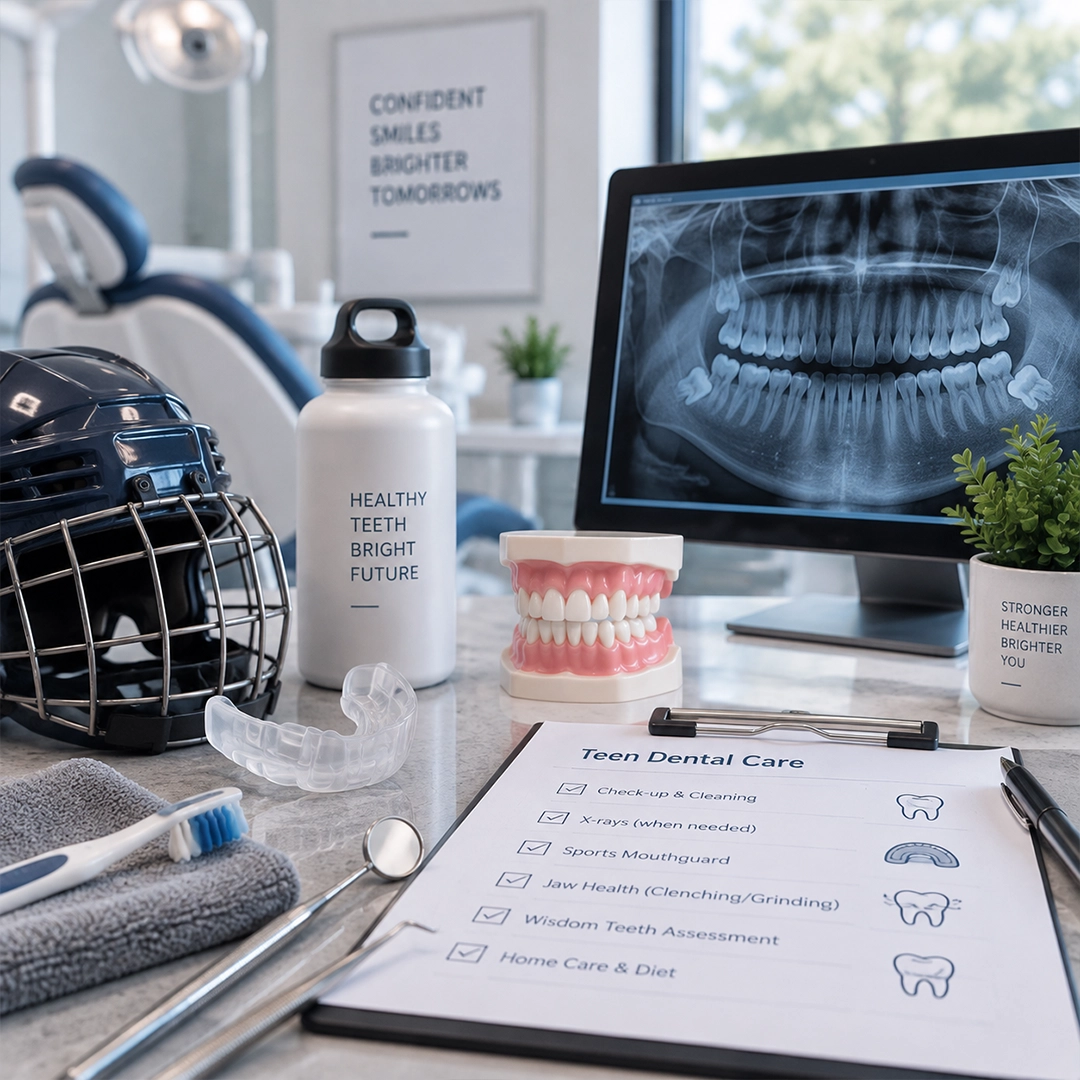
By the mid-teens, most permanent teeth are usually in place, and routine visits begin to resemble adult preventive care: an exam, a cleaning, and X-rays when clinically indicated.
The topics can change too. A teen playing hockey in Dunnville may need a sports mouthguard, while morning jaw soreness may prompt a closer look at possible clenching or grinding. Home-care habits and diet can also come up when the dentist or hygienist sees an area that needs attention.
Between ages 16 and 19, wisdom teeth may also be assessed. An exam and appropriate dental imaging can show whether they are developing, how they are positioned, whether they are erupting or remain beneath the gum, and how they relate to nearby teeth. Some wisdom teeth are simply monitored over time. An evaluation is a chance to see what is happening and decide whether follow-up is needed, not an automatic recommendation for removal.
Insurance, Direct Billing & CDCP for Children’s Dental Care
Family Dental Care Cayuga accepts private and employer dental insurance plans as well as the Canadian Dental Care Plan (CDCP). Eligible claims can be submitted electronically where applicable, and direct billing may be available when the individual plan allows it.
Coverage for children’s dental care varies by plan and service. An exam, cleaning, X-ray, or other treatment may be handled differently under each plan, so it is useful to confirm the details before the appointment. Your insurer can explain the benefits, limits, and any portion that remains your responsibility.
Families across Haldimand County can bring their insurance or CDCP information to the visit so the office has the details needed for eligible electronic claim submission where applicable.
Clinical note. Call (905) 772-3535 with insurance questions before booking.

Frequently Asked Questions About Children’s Dental Care in Cayuga
Does Family Dental Care Cayuga accept CDCP for children’s dental care? Yes. Private and employer dental insurance plans are also accepted. Eligible claims may be submitted electronically where applicable, and direct billing may be available when the individual plan allows it. Coverage varies by plan and service.
Questions Before Your Child’s Visit?
Use this form for non-urgent questions before booking, or if you are not yet sure which type of visit to ask for. For current tooth pain, swelling, a broken tooth, or a dental injury, call (905) 772-3535 instead.